Bouquet sizing guide: match your dress and venue proportions
Choosing a bridal bouquet is never just about flowers. Size changes the whole feel of your look. A bouquet that is too large can swallow a delicate dress; one that is too small can disappear against a grand gown or a big ceremony space. This Bouquet sizing guide: match your dress and venue proportions breaks the decision down in a simple, practical way so you can choose with confidence, not guesswork.
Whether you are planning a city registry wedding, a church ceremony, a country-house reception, or a small civil celebration, proportion is the quiet detail that makes everything feel right. And honestly, once you see a bouquet in the correct scale, you notice it immediately. It just looks settled. Balanced. Measured. That is what we are aiming for here.
Along the way, we will look at dress silhouettes, venue size, bouquet shapes, handling comfort, and a few common mistakes that are easy to avoid. You will also find a checklist, comparison table, and a real-world example to help you narrow things down.
Why Bouquet sizing guide: match your dress and venue proportions Matters
Bouquet size affects far more than appearance. It shapes balance in photographs, comfort during the ceremony, and how cohesive your overall styling feels. A bouquet is one of the first things people notice in bridal portraits, but it should not fight with the dress or the room. It should sit alongside them.
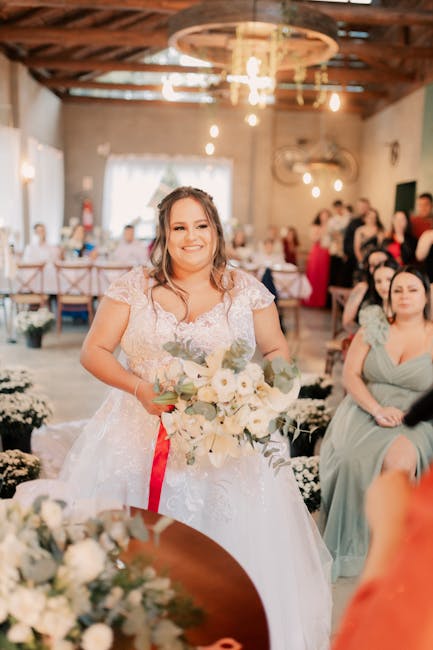
In practical terms, the bouquet needs to work with three things at once: your body proportions, your dress silhouette, and the setting. A slim sheath dress usually wants a lighter, more refined bouquet. A dramatic ballgown can carry a fuller, more structured arrangement. A small bouquet in a grand venue may look underdone; an oversized bouquet in a compact room can feel a bit much. To be fair, that mismatch is one of the most common reasons brides say something feels "off" in photos, even if they cannot put their finger on why.
If you are coordinating flowers for a wedding day, bouquet scale also matters for practicality. You need to hold it comfortably, pass it easily to a bridesmaid, and keep it looking good in motion. That is where the balance comes in. Style should never make the bouquet awkward to carry.
For broader planning around service standards, delivery expectations, and care, it can help to review the site's flower delivery information and the practical flower care guidance. Those pages are useful when you are thinking beyond the bouquet itself and looking at the full journey from ordering to the ceremony.
Expert summary: the best bouquet size is not the biggest or the most expensive one. It is the one that feels visually calm against your dress and proportionate in your venue. If the bouquet and outfit compete, the eye gets tired. If they support each other, everything looks more polished.
How Bouquet sizing guide: match your dress and venue proportions Works
Think of bouquet sizing as visual scaling. You are matching the bouquet's width, depth, and height to the scale of the outfit and the space around it. There is no single perfect formula, but there are dependable patterns that make choosing much easier.
1. Start with the dress silhouette
The dress shape is usually the best starting point. A bouquet sits in relation to the line of the gown, not in isolation. Here is the simple logic:
- Fitted or minimalist dresses usually suit smaller to medium bouquets with clean lines.
- A-line dresses can handle a little more volume, especially if the bouquet has a rounded form.
- Ballgowns and fuller skirts often need a more substantial bouquet so the hand-held arrangement does not disappear.
- Tea-length or shorter dresses can look best with slightly looser, less bulky designs.
The trick is not simply "big dress, big bouquet." It is about visual weight. A bouquet should feel like it belongs to the dress, not sit on top of it like an afterthought.
2. Consider the scale of the venue
Venue proportions matter just as much. A small bouquet in a cathedral can feel swallowed by the architecture. A large bouquet in a tiny registry office may crowd the frame. This is especially noticeable in aisle shots, altar portraits, and group photos.
As a rough guide, bigger, more formal spaces can support fuller bouquet shapes, while smaller venues tend to suit tighter, cleaner arrangements. If the ceremony space has high ceilings, long aisles, or heavy architectural detail, a bouquet with a little more presence can hold its own. If the room is intimate, with close seating and soft light, a bouquet that is too voluminous can dominate the moment.
3. Balance bouquet shape with dress detail
If your dress has lace, beading, ruffles, or strong texture, the bouquet should usually be simpler. That lets the dress do its work. If the dress is smooth and understated, the bouquet can carry more of the visual interest through colour, layering, or shape.
There is a subtle but important point here: the bouquet does not need to copy the dress, but it should respect it. A highly detailed dress with an equally busy bouquet can feel cluttered. A clean dress with a completely plain bouquet can sometimes feel under-styled. A little contrast is usually the sweet spot.
4. Think about how it will move
A bouquet looks different held still and carried for two hours. The weight, grip, and balance matter more than people expect. If it is very full at the front, it may tip forward. If it is too stem-heavy, it can feel awkward in the hand. A good florist will think about how the bouquet sits from the side as well as from the front.
That movement piece is easy to miss, frankly. Yet it affects the day more than most couples realise.
Key Benefits and Practical Advantages
Matching bouquet size to dress and venue proportions does more than improve aesthetics. It makes the day easier to live through, which is probably the real goal.
- Better photos: Proportionate bouquets create cleaner lines in portraits and group shots.
- Clearer styling: When dress, flowers, and setting are in harmony, the whole event feels more intentional.
- More comfort: A bouquet that is the right size is easier to hold, carry, and hand over.
- Less visual clutter: You avoid competing focal points, especially with embellished dresses or intricate venues.
- Stronger first impression: Guests tend to notice balance before they notice flower names.
There is also a practical budget advantage. If you know the size you actually need, you are less likely to overspend on stems or add bulk that does not improve the look. In real life, that matters. Flowers are often one of the more emotional purchases in wedding planning, and a sensible size decision can save you from "just add more" syndrome.
For couples who want a dependable ordering experience, it may also be worth reading about guarantees and service reassurance alongside the delivery details. Knowing what happens before the flowers arrive helps reduce last-minute stress, and there is already enough of that on a wedding week.
Who This Is For and When It Makes Sense
This guide is useful for anyone planning flowers for a wedding, civil ceremony, elopement, vow renewal, or styled shoot where the bouquet needs to read correctly on camera and in person.
It is especially helpful if you are:
- choosing your own bridal bouquet and want a clearer way to decide on size;
- working with a florist but need a better sense of scale before ordering;
- pairing flowers with a detailed or unusual dress;
- planning a wedding in a venue with strong architectural features;
- trying to coordinate bridesmaid bouquets with the bride's bouquet;
- managing floral styling for a corporate or event setting where visual proportion matters.
It also makes sense if you are comparing bouquet styles but struggling with the language. Small, medium, large, hand-tied, trailing, posy, dramatic, compact... the terms can blur together. Sometimes what a florist calls "medium" is already enough for a petite frame, and sometimes a "large" bouquet is still visually restrained because the stems are open and airy. The label is less helpful than the actual shape.
If you are planning flowers for a wider event rather than a wedding only, the site's corporate accounts information can be useful for recurring floral needs, while the about us page gives a better sense of the team and approach behind the service.
Step-by-Step Guidance
Here is a straightforward way to choose the right bouquet size without overcomplicating it. Try it in order.
Step 1: assess your dress from a distance
Stand back and look at the silhouette in a mirror or fitting photo. Ask yourself: is the dress clean and minimal, or is it already visually busy? Does the skirt create volume? Is the neckline the main feature? Your bouquet should support the strongest design line, not compete with it.
Step 2: decide which feature you want to lead
Every bridal look needs a lead element. Sometimes it is the dress, sometimes the bouquet, sometimes the venue style. If the gown is the star, keep the bouquet slightly more restrained. If the styling is intentionally floral-forward, you can push the bouquet size up a little. This is a design choice, not a rule, but it helps.
Step 3: compare bouquet size to your torso and frame
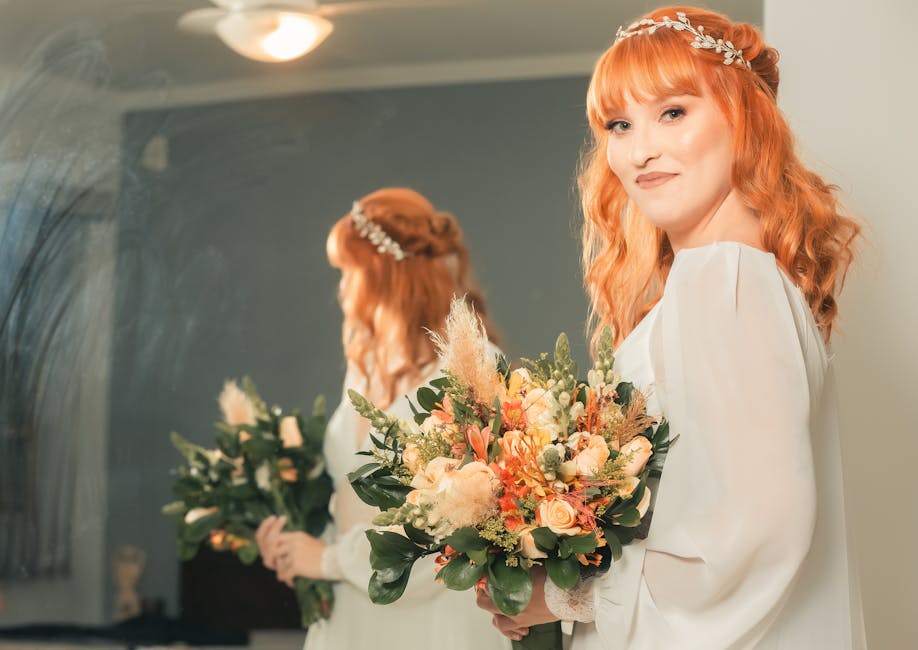
A useful check is to imagine the bouquet against your upper body. A bouquet usually looks best when it does not overwhelm the waistline or disappear below the hip line. Petite brides often find that mid-sized bouquets photograph better than very large ones. Taller brides can carry more width without losing balance.
Step 4: match the venue mood
Ask whether the ceremony feels intimate, formal, grand, rustic, or modern. A country barn might suit a relaxed garden-style bouquet. A historic hotel might welcome a more structured arrangement. A contemporary registry office often looks cleaner with a compact shape and refined palette.
Step 5: choose the bouquet shape before choosing extra volume
Shape matters just as much as size. A round bouquet, a cascading bouquet, and a loose garden bouquet can all contain similar numbers of stems, yet feel very different. A bouquet with airy spacing may look larger without actually being heavy. A tight round bouquet may look compact but visually dense.
Step 6: test it in photographs
If possible, hold a sample bouquet or mark out approximate dimensions in a mirror photo. Even a rough visual test is useful. Wedding planning is full of "I thought that would be fine" moments. This is one area where a quick check saves regret later.
Step 7: confirm handling and delivery timing
Once the size is settled, make sure you know how it will arrive, how it should be stored, and when it should be received. That is where practical planning comes in. The bouquet is only at its best if the logistics are sensible too. For that part, the site's payment information and terms and conditions can help set clear expectations before ordering.
Expert Tips for Better Results
These are the small things that often make the biggest difference.
- Use the bouquet to soften, not fight, the dress. If the dress has sharp lines, a looser bouquet can soften the overall effect.
- Watch the edge detail. Large blooms near the outer rim of the bouquet can make it appear wider than it is.
- Mind the stems. Long exposed stems can make a bouquet feel taller and less compact, even if the floral head is modest.
- Check the bouquet at eye level and waist level. It may look perfect in one view and too heavy in another.
- Think about movement in the aisle. A bouquet that hangs comfortably will look better in motion than one that is technically beautiful but awkward.
- Be careful with matching bridesmaids too closely. The bride's bouquet should stand apart in scale, but not by a huge amount if the overall style is meant to feel calm and coordinated.
A florist will often judge proportion by instinct after a few seconds, and that instinct is worth listening to. Still, you can ask for the bouquet to be shown next to a dress swatch, a photo of the gown, or even a venue image. A quick visual reference helps more than a long explanation. Truth be told, it prevents a lot of misunderstandings.
If sustainability matters to you, it is also worth checking whether the floral choices and packaging align with your values. The sustainability information is a sensible place to start when you want a bouquet that feels thoughtful as well as beautiful.
Common Mistakes to Avoid
Most bouquet sizing problems come from one of these mistakes.
Choosing by flower type alone
People often say, "I want peonies," or "I want roses," and leave size as an afterthought. But flower type does not determine proportion on its own. A bouquet of peonies can be soft and compact, or wide and cloud-like. Same flowers, very different effect.
Ignoring the dress texture
A heavily embellished dress needs more restraint than a plain gown. If both the fabric and the bouquet are highly detailed, the look can become busy in a hurry.
Going too small for a dramatic venue
In a large church, manor house, or vaulted space, a tiny bouquet can feel visually lost. This is especially true when the dress itself also has a simple silhouette. The whole look can read smaller than intended.
Overcompensating with size
Some couples choose a huge bouquet because they want drama. Drama is fine. But if the bouquet starts to dominate the dress or becomes hard to carry, the style loses grace. Bigger is not always better. Not really.
Forgetting how the bouquet photographs from the side
Front-facing images do not tell the whole story. Side views, hand position, and stem length all show up in real wedding photos. A bouquet can look elegant in a still image and strangely bulky in profile.
Not accounting for body height
Height is not the only factor, but it does affect how bouquet size reads. Very petite brides can be overwhelmed by large, dense bouquets; taller brides may need more presence for balance. It is not about rules, just proportion.
If you need extra support after delivery or are unsure about a bouquet once it has arrived, the returns and refund information is worth reviewing in advance so you know where you stand. Planning for peace of mind is never wasted effort.
Tools, Resources and Recommendations
You do not need specialist design software to get bouquet sizing right. A few simple tools will do the job.
- Phone photos of the dress: front, side, and full-length images are enough to judge proportion.
- Venue photos: especially the ceremony space, aisle, and altar area.
- Fabric swatches or colour references: useful for matching tone and visual intensity.
- Measuring tape: a very practical way to compare bouquet width against your torso or dress.
- Mirror selfies or sample hold-ups: not glamorous, but very effective.
For the actual ordering process, make sure you understand the expected lead time and delivery window. That is particularly important if you need flowers for a specific date or if your wedding is happening during a busy period. The flower delivery page and general delivery guidance can help you plan around timing.
It is also sensible to keep a basic contact point ready in case you need to clarify an order detail or ask a last-minute question. The contact page is the obvious place to save for that, because let's face it, wedding plans rarely behave themselves right up to the end.
Law, Compliance, Standards, or Best Practice
For bouquet sizing specifically, there is no formal legal rule that dictates what size you should choose. This is a design and planning decision. However, there are sensible best practices that matter when you are ordering flowers online or arranging them for an event in the UK.
- Clear product descriptions: the bouquet should be described in a way that is reasonably easy to understand.
- Delivery expectations: timing and handling should be communicated clearly, especially for event-date flowers.
- Transparent terms: it helps to know payment terms, substitutions, and refund conditions before you place an order.
- Accessibility and user clarity: website information should be easy to find and use, especially for time-sensitive orders.
If you are ordering for a business event or a larger recurring account, documents like the accessibility statement, privacy policy, and modern slavery statement can offer reassurance around website practice and supplier standards. They are not styling guides, of course, but they do matter for trust.
Best practice in floristry is simple: describe, confirm, deliver, and support the customer clearly. That is what reduces errors and keeps expectations realistic.
Options, Methods, or Comparison Table
If you are still deciding, this simple comparison can help you match bouquet style to dress and venue scale.
| Bouquet style | Best dress match | Best venue match | General feel |
|---|---|---|---|
| Compact posy | Minimal, tea-length, fitted | Small rooms, registry offices | Neat, polished, understated |
| Rounded hand-tied bouquet | A-line, classic bridal gowns | Most venues, especially medium spaces | Balanced, versatile, traditional |
| Loose garden bouquet | Soft lace, romantic dresses | Barns, gardens, country venues | Relaxed, airy, natural |
| Cascading bouquet | Statement gowns, formal styles | Grand venues, churches, elegant hotels | Striking, flowing, dramatic |
| Large structured bouquet | Simple dresses that need visual presence | Large ceremony spaces | Bold, symmetrical, formal |
There is no universally "best" option. There is only the best fit for the look you want. And, if you are honest with yourself, the best fit for how comfortable you want to feel walking, posing, hugging people, and trying to remember where to put your hands.
Case Study or Real-World Example
Imagine two brides planning in very different settings.
The first is wearing a simple crepe column gown for a civil ceremony in a London registry office. The room is compact, bright, and modern, with clean lines and not much decorative clutter. In that setting, a medium compact bouquet with a refined shape works beautifully. It gives the look enough presence without overwhelming the dress or the room. A huge bouquet would feel a little theatrical. Cute in theory, less good in reality.
The second bride is getting married in a country house with a long aisle, high ceilings, and rich architectural detail. Her dress is fuller at the skirt and has soft lace through the bodice. Here, a slightly larger hand-tied or loose garden bouquet feels right. It carries enough visual weight to stand up to the room and complements the softness of the dress. The bouquet becomes part of the scene instead of floating awkwardly in front of it.
In both cases, the flowers do not need to be identical in size or style. They need to be proportionate. That is the real lesson. Once the bouquet is scaled correctly, everything else feels easier: the photos, the walk down the aisle, the handover to a bridesmaid, the quiet moment before the ceremony starts. That little moment where you take a breath and say, yes, this feels right.
Practical Checklist
Use this quick checklist before confirming your bouquet size.
- Have you looked at your dress silhouette from more than one angle?
- Does the bouquet size suit your height and frame?
- Will the bouquet feel balanced against the dress detail?
- Does the venue call for a subtle, medium, or fuller visual scale?
- Have you considered how the bouquet will look in photographs?
- Will it be comfortable to hold for the length of the ceremony and photos?
- Have you asked about delivery timing and handling?
- Do you know the florist's substitution, payment, and refund terms?
- Have you checked care guidance for the flowers once they arrive?
- Does the final design feel calm and intentional rather than crowded?
If you can tick most of those off, you are in good shape. Not perfect maybe, but good enough to trust the decision.
Conclusion
The best bouquet sizing decisions are rarely dramatic. They are considered. A bouquet that matches your dress and venue proportions will usually look more elegant, feel more comfortable, and photograph better than one chosen by instinct alone. The result is a look that feels composed from every angle, which is exactly what most brides want on the day.
Keep it simple: let the dress lead, let the venue influence scale, and let the bouquet support the whole picture. If you are unsure, choose the option that feels balanced rather than the one that shouts the loudest. That usually wins.
Get a free quote today and see how much you can save.
For more background on the team and service approach, you can also explore the homepage and learn more about the people behind the flowers. And if you ever need help clarifying an order, do not sit on it for days; a quick check can save a lot of hassle later.
In the end, the right bouquet is the one that lets the whole moment breathe.
Frequently Asked Questions
How do I know if my bouquet is the right size for my dress?
Look at the dress silhouette first, then compare the bouquet against the amount of visual detail in the gown. If the dress is already ornate, a smaller or simpler bouquet often works better. If the dress is minimal, a slightly fuller bouquet can add balance.
Should a bouquet be bigger for a grand venue?
Usually, yes, but only to a point. A large venue can support a more substantial bouquet because the room has more visual scale. That said, the bouquet should still feel comfortable and suit the dress. Bigger is helpful only if it stays elegant.
What bouquet size works best for a petite bride?
Petite brides often suit compact to medium bouquets with a balanced shape. Very large or top-heavy designs can overwhelm the frame. A slightly airy bouquet can sometimes look larger without becoming physically bulky, which is a useful trick.
What if my dress has a lot of lace or beading?
Then you will usually want to avoid a very busy bouquet. A cleaner arrangement lets the dress detail stand out. A bouquet with softer shapes and controlled volume often complements embellished fabric best.
Are round bouquets or loose bouquets better for proportion?
Neither is automatically better. Round bouquets look tidy and classic, while loose bouquets feel softer and more relaxed. The better choice depends on the dress and venue. A round bouquet can suit a structured gown, while a loose bouquet may suit a romantic, textured dress.
How far in advance should I decide bouquet size?
Ideally, once you have chosen the dress and a good idea of the venue setting. The earlier you decide, the easier it is for the florist to plan stem counts, shape, and delivery timing. Leaving it too late can make styling choices feel rushed.
Can I use the same bouquet size as my bridesmaids?
You can, but the bride's bouquet usually has a little more presence. It does not need to be huge, just distinct enough to read as the primary bouquet. A subtle size difference is often enough.
Does bouquet size affect cost?
Generally, yes. Larger bouquets usually require more flowers, more labour, and sometimes more intricate structure. But cost is also influenced by flower choice, seasonality, and design style. A compact bouquet with premium blooms can cost more than a bigger bouquet with simpler stems.
What should I check before delivery day?
Confirm the delivery window, storage instructions, and any care guidance. Make sure someone will be available to receive the flowers if needed. Reviewing the delivery and flower care information in advance can prevent avoidable stress.
Can bouquet size look different in photos than in real life?
Absolutely. Cameras can exaggerate size, flatten texture, or change how a bouquet sits against the dress. That is why proportion matters so much. A bouquet that looks fine in person should also be checked against likely photo angles, not just the mirror.
What is the safest choice if I'm undecided?
Choose a medium bouquet with balanced shape and moderate density. It is the most adaptable option for different dress styles and venue sizes. If you are unsure, medium is usually the least risky starting point.
Is there a rule for bouquet size in UK weddings?
No formal rule exists. The standard is really best practice: choose a size that suits your dress, body proportions, venue, and comfort. In the UK, as in most places, the decision is guided by style and practicality rather than regulation.