Eco-friendly methods florists use for large wedding installations
Large wedding flowers can look extraordinary without leaving a heavy footprint behind. That is the real shift happening in modern floristry: couples still want drama, height, movement, and a proper "wow" moment, but they also want the installation to feel thoughtful, low-waste, and responsible. Eco-friendly methods florists use for large wedding installations make that possible, and in practice they're often just as elegant as the old, wasteful approach. Sometimes more so.
If you've ever stood under a flower arch at a late-summer reception and thought, "How on earth did they build all this without mountains of plastic and soaked foam?", you're in the right place. This guide breaks down how sustainable wedding floristry really works, what methods professionals rely on, where the risks are, and how to choose options that suit your venue, budget, and style. It also covers practical planning points that people often miss until the last week. Which is usually a bit late, truth be told.
Why eco-friendly wedding installation methods matter
Large floral installations are resource-heavy by nature. They need structure, hydration, transport, labour, refrigeration in some cases, and a lot of material planning. If a florist takes a shortcut with foam, single-use plastics, and over-ordering, the result can be beautiful on the day but wasteful by the end of the evening. And for many couples, that no longer feels right.
Eco-friendly methods are not just about "being green" in a vague sense. They solve a practical problem: how to create scale without disposable build materials. That matters for a wedding because installations are often the most visible floral feature in the room. The ceremony arch, suspended meadow, staircase banister, entrance frame, or long top-table runners set the tone immediately. If those pieces are designed well, they can be dismantled cleanly, repurposed, donated where appropriate, or composted more responsibly.
There's also a trust element. Couples are increasingly asking where flowers come from, how they're conditioned, how much will be reused, and whether the mechanics can be removed without leaving a trail of broken plastic behind. Florists who can answer those questions clearly tend to earn confidence faster. It's not marketing fluff; it's part of the service.
Practical takeaway: sustainable wedding floristry is not about making arrangements look smaller or simpler. It's about using smarter structures, fresher buying habits, and cleaner breakdown plans so the design feels luxurious without unnecessary waste.
If sustainability is central to your planning, it may help to look at a florist's wider approach too. A business that publishes its values openly, such as a visible sustainability commitment, usually gives you a better sense of how seriously those choices are taken day to day.
How sustainable large-scale floral installations work
At the heart of eco-friendly installation design is a simple idea: build the structure first, then add flowers in the most efficient way possible. Traditional large-scale work often relied on foam blocks because they were quick and kept stems in place. The eco-friendly approach replaces that dependence with reusable, repairable, or compostable systems wherever possible.
In real terms, florists may use chicken wire cages, moss alternatives, water tubes, reusable frames, hidden mechanics, clip systems, or natural support materials that reduce disposable waste. The choice depends on the venue, flower types, design shape, how long the flowers need to last, and how much wind, heat, or movement the installation will face. A bright church porch in July is a very different beast from a candlelit hotel ballroom in November.
Good sustainable floristry is also operational. It starts before flowers are bought. The florist will usually plan stem counts carefully, group blooms by water need, and stage mechanics so they can be installed in sections. This reduces unnecessary handling, bruising, and waste. A smart florist doesn't just ask "What looks beautiful?" They also ask "What can be reused, broken down, transported safely, and composted responsibly afterward?"
There is another layer too: sourcing. Flowers may be chosen for seasonality, hardiness, and transport efficiency. A florist building a large wedding installation in spring might lean into tulips, ranunculus, narcissus, hellebores, blossom, or foliage that naturally suits the time of year. In late summer, dahlias, garden roses, scabious, hydrangea, and textured greens might do the heavy lifting. Seasonal selection reduces the need for long-haul substitutions and usually gives the design a more natural feel. Convenient, really.
Common eco-friendly mechanics florists use
- Reusable frames made from metal or wood for arches, plinths, entrance pieces, and hanging structures.
- Chicken wire or mesh forms to hold stems in place without floral foam.
- Water vessels and hidden containers for arrangements that need longer hydration.
- Natural tying materials such as twine, raffia, or reusable fastenings where appropriate.
- Compartmented design, where flowers are arranged in modular sections that can be reused or relocated later.
- Mechanical support from venue features, used carefully and with permission, so the installation relies less on single-use materials.
One useful thing to remember: eco-friendly does not automatically mean foam-free in every single situation. Some florists still use very limited amounts of certain materials when the client brief, flower choice, or structural demands make it genuinely necessary. The best practice is to treat foam as a last resort, not the default. That distinction matters.
Key benefits and practical advantages
The benefits of sustainable installation methods go beyond environmental appeal. They often improve the entire workflow from proposal to pack-down, which is why experienced florists are leaning this way even when clients haven't asked directly.
- Less waste at the end of the event: reusable mechanics and seasonal planning reduce landfill-heavy clean-up.
- Better design flexibility: modular systems make it easier to move pieces between ceremony and reception.
- Cleaner venue handover: fewer disposable materials means less mess and less awkward pack-down.
- Stronger brand story: couples can feel good about the investment without compromising the look.
- Often better value over time: reusable structures can be used repeatedly by the florist, which can support pricing stability.
- More thoughtful sourcing: seasonal flowers often look more cohesive and age more gracefully on the day.
There's also a subtle visual advantage. Installations built with proper structure and fewer hidden consumables often feel more open and airy. They breathe. The flowers have room to move a little, which makes them look less packed and less artificial. That's a small detail, but on camera it can make a big difference.
For couples concerned about service quality as well as sustainability, it helps to choose a florist with clear policies around delivery timing, flower handling, and aftercare. Pages like flower care guidance and delivery information can be a good sign that the business thinks carefully about product condition from start to finish.
Who this is for and when it makes sense
This approach makes the most sense for couples and planners who want scale, beauty, and responsibility in the same package. That includes city weddings, marquee receptions, stately home celebrations, intimate but high-design ceremonies, and corporate or multi-day events where the floral elements need to hold up well across different moments.
It is especially useful when:
- the installation is large enough that waste would otherwise be obvious;
- the couple wants the ceremony flowers repurposed for the reception;
- the venue prefers clean breakdowns and minimal debris;
- the design brief includes seasonal or locally appropriate flowers;
- the budget needs to work hard, with reusable mechanics helping the florist avoid one-time materials.
It also makes sense for anyone who knows they'll be photographing the flowers from several angles. Sustainable mechanics often allow for neater backs, hidden support, and more considered shaping. No one wants to see a lump of soggy material tucked behind a beautiful arch. Let's face it, that kills the illusion immediately.
If you're planning flowers for a company event or hospitality setting as well as weddings, a florist's wider event capability can matter. Some businesses use services like corporate accounts for repeat ordering and structured planning, which can be helpful when the floral work is part of a larger calendar of events.
Step-by-step guidance
Here's the practical route a good florist usually follows when building a large eco-friendly wedding installation.
- Start with the venue and finish point. Where will guests first see the installation, and where will it end up after the ceremony? If it can move, great. If it can't, the design needs to work harder in place.
- Choose the mechanics before the flowers. This is the bit people skip. But the frame, vessel, and support system decide the design more than most couples realise.
- Select flowers by season and durability. Some blooms travel and hydrate beautifully; others are fussier. Your florist should balance beauty with practical staying power.
- Plan for reuse. Ceremony pieces can become reception features, staircase garlands, bar arrangements, or photo-area backdrops if the structure is designed with that in mind.
- Reduce water stress in transit. Staging flowers properly before installation keeps them fresher and avoids the panic of droopy heads halfway through setup.
- Install in sections. Modular build-out is faster, cleaner, and easier to repair on site if one area needs adjusting.
- Break down with purpose. The florists should know, in advance, what will be reused, composted, donated, or removed as recycling where local facilities allow.
A lot of sustainable success comes down to planning the breakdown before the build. That sounds obvious, but in the rush of a wedding morning, obvious things are easy to forget. The van is unloading, the registrar is due, the aisle needs a final tweak. Good systems help everyone stay calm.
Mini example of a smart workflow
A florist might build a ceremony arch on a reusable metal frame with water-retaining vessels tucked into discreet pockets. The arch is designed in two halves so it can be transported through a narrow doorway, secured quickly, and then moved after the ceremony to frame the cake table. The flowers stay in water for most of the day, the support is reused next time, and nothing has to be thrown away because it was never meant to be single-use in the first place. Simple. Effective.
Expert tips for better results
Experienced florists tend to be fussy in the right places. That fussiness is a good thing. It usually means better longevity, cleaner lines, and less waste.
- Use flowers with similar water needs together. This makes the installation easier to manage and helps protect delicate stems.
- Mix focal flowers with plenty of texture and foliage. Sustainable designs often rely on greenery to create volume efficiently.
- Ask for a repurposing plan early. If ceremony flowers are going to the reception, the structure must be designed for that from day one.
- Choose reusable vessels where visibility allows. Stoneware, glass, metal, and well-made containers can all play a role.
- Keep the palette disciplined. Fewer flower types can sometimes create a stronger, more luxurious effect than a crowded mix.
- Allow for weather swings. In the UK, one sunny hour and then a damp breeze is hardly unusual, so installations need some resilience.
And a small but important one: talk about access. A clever design is no use if it cannot actually get into the venue safely. Staircases, low ceilings, listed features, narrow service entrances, and parking restrictions all affect what is possible. A florist who asks about these early is doing you a favour.
If you want to understand a florist's wider standards, look at the less glamorous pages too. A clear about us page, transparent guarantees, and straightforward contact options can tell you a lot about how the business operates before the big day.
Common mistakes to avoid
Large wedding installations can go wrong in small, annoying ways. Most of them are preventable.
- Designing first, mechanics later. This leads to unstable builds and unnecessary waste.
- Over-ordering flowers. A little contingency is sensible; a mountain of surplus stems is not.
- Ignoring transport conditions. Heat, vibration, and cramped loading can ruin delicate work fast.
- Using one-off materials everywhere. If every part of the installation is disposable, the "eco-friendly" label doesn't really hold up.
- Forgetting the post-event plan. The last stage matters just as much as the first.
- Assuming all seasonal flowers behave the same. They don't. Some are robust, some are diva-ish. Beautiful divas, but still.
Another common issue is underestimating time. Sustainable installs can be more thoughtful to build, especially if modular mechanics need assembly on site. That does not mean they are inconvenient. It just means the build schedule should be realistic. A florist who says, "We'll need the room from 7 a.m.," is usually trying to protect the final result, not make life difficult.
Tools, resources and recommendations
Florists working sustainably on large weddings tend to rely on a mix of practical tools and careful sourcing decisions rather than any single magic product.
Useful tools and materials
- Reusable frames and stands for arches, hanging installations, and focal pieces.
- Chicken wire cages shaped to the design for stem support.
- Water tubes and hidden hydration points for high-need flowers.
- Florist knives, snips, and tying tools for efficient on-site preparation.
- Modular crates or racks for safer transport and pre-sorting.
- Compostable wraps or paper-based packaging where appropriate.
What to ask your florist
- Which parts of the installation are reusable?
- How much floral foam, if any, will be used?
- Can the ceremony flowers be repurposed for the reception?
- How will the flowers be transported and kept fresh?
- What happens after the event?
- Do you have a sustainability policy or sourcing approach I can review?
That last question is useful because it cuts through vague claims. A florist who can explain their method simply is usually the one who has actually thought it through. If you want a sense of broader company policies around ordering and service, pages such as returns and refund guidance and terms and conditions can also help you understand how the business handles expectations.
Law, compliance, standards, or best practice
For wedding floristry in the UK, the key point is usually less about one dramatic legal rule and more about sensible compliance, venue cooperation, and good handling practice. Large installations often involve access agreements, fire safety awareness, safe lifting, and venue-specific restrictions. In listed buildings or tightly managed venues, hanging points, fixings, and attachment methods may need approval. That can be a simple admin step, or it can be the difference between a smooth install and an awkward phone call on the morning of the wedding.
Florists also need to think carefully about material disposal. If waste is separated for recycling or composting, it must be done in line with local facility requirements and what the venue actually allows. Not every council or venue handles green waste in the same way, so it is better to check than assume. The same goes for reused water, packaging, and transport waste. Best practice is to build a plan that the florist and venue can actually carry out without guesswork.
From an ethical perspective, sourcing transparency matters too. Couples increasingly want reassurance that flowers, foliage, and supporting materials are selected responsibly and that supply chains are handled carefully. A business's modern slavery statement can be part of that trust-building picture, even if the couple never reads it in detail. It signals that the company is at least taking supply-chain responsibility seriously.
One gentle note: compliance is rarely the sexiest part of wedding planning, but it protects the beauty of the day. Not glamorous. Very useful.
Options, methods, or comparison table
Here is a simple comparison of common approaches used for large wedding installations. The best option depends on the design brief, venue, and how much reuse you want.
| Method | Best for | Eco impact | Practical notes |
|---|---|---|---|
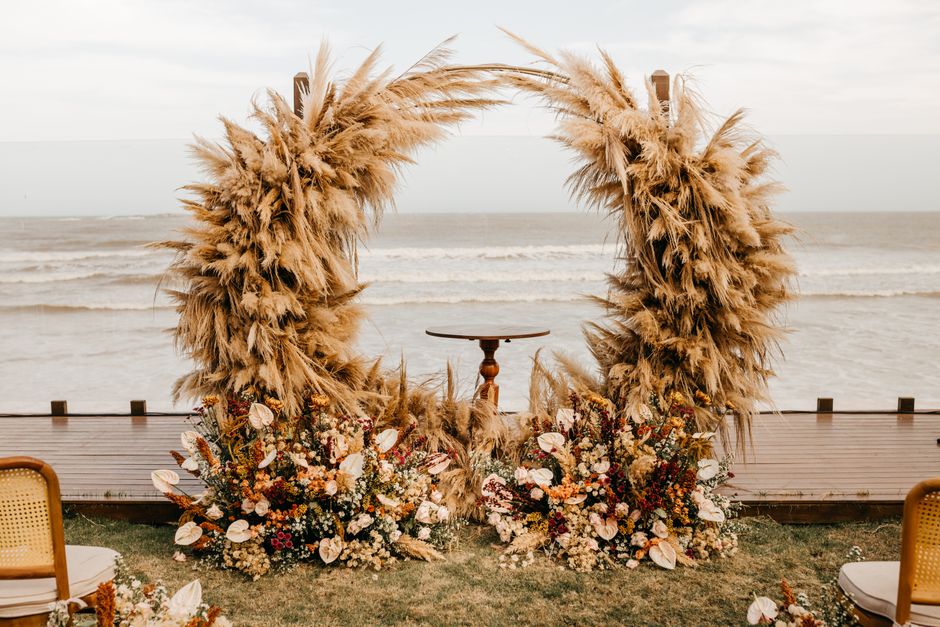
| Reusable metal frame with stems wired or tucked in place | Arches, moongates, ceremony backdrops | Low waste, highly reusable | Great for repeated use; needs careful design and transport |
| Chicken wire and natural support mechanics | Meadowy designs, urns, garlands, asymmetrical pieces | Lower waste than foam, if reused responsibly | Flexible and breathable, but needs skill and secure shaping |
| Limited floral foam use | Very specific forms or difficult structures | Lower sustainability | Use sparingly and only where no better option is suitable |
| Modular arrangements in vessels | Table centres, long runs, stage or aisle features | Good, especially if vessels are reused | Easy to repurpose after the ceremony |
| Seasonal, locally appropriate flower selection | Most large wedding designs | Strong sustainability advantage | Often improves visual cohesion and availability |
If you want the short answer, reusable structures plus seasonal flowers are usually the strongest starting point. Then the florist can layer on detail based on the venue and the couple's style. There is rarely a one-size-fits-all solution. Annoying, but true.
Case study or real-world example
Picture a summer wedding in a London venue with a narrow service corridor and a reception room that needs to double as ceremony space. The couple wants a soft, abundant floral arch at the aisle entrance, plus a statement piece behind the registrar's table, and then a smaller design near the cake.
A sustainable florist might solve this by building one modular frame divided into sections, each dressed with seasonal flowers and layered foliage. The arch is arranged so the central floral mass can be detached and shifted after the ceremony. The smaller statement piece is formed using the same reusable base, with extra blooms redistributed rather than duplicated. Instead of producing three separate throwaway structures, the florist creates one adaptable system that serves multiple moments.
The result feels generous, not stripped back. Guests see a full floral presence throughout the day, but the pack-down is far cleaner. Fewer materials are discarded, the room clears faster, and the florist leaves with reusable kit rather than a skip-full of foam and plastic. That is the sweet spot, really: beautiful on the day, sensible after it.
And yes, it usually photographs well too. Soft light on layered petals, a bit of movement in the greenery, maybe a candle glow later in the evening. You know the sort. It looks calm, even if the setup behind it was slightly chaotic for an hour.
Practical checklist
Use this checklist when planning eco-friendly large wedding florals.
- Confirm the venue's installation rules and access times.
- Ask which parts of the design are reusable after the event.
- Request seasonal flower suggestions rather than fixed bloom lists.
- Check whether the florist has a repurposing plan for ceremony-to-reception moves.
- Discuss transport, hydration, and on-site assembly timing.
- Ask how waste will be separated, reused, or composted.
- Clarify whether any floral foam will be used and why.
- Make sure the structure suits the flowers instead of forcing the flowers to carry the structure.
- Review the florist's policies, guarantees, and practical service information.
- Confirm the final breakdown and collection arrangement in writing.
If you are comparing providers, a bit of due diligence goes a long way. It is not being fussy. It is protecting the money, the look, and the day itself.
Conclusion
Eco-friendly methods florists use for large wedding installations are no longer a niche idea for couples who want something "a bit greener." They are becoming the smarter way to build large-scale floral moments that look refined, work efficiently, and leave less behind. Reusable frames, seasonal selection, modular design, low-waste breakdowns, and careful sourcing all add up to something that feels both elegant and considered.
The best part is that sustainability does not have to change the emotional impact of the flowers. It can actually sharpen it. A well-designed installation feels more alive when it has been planned properly from the ground up. More intentional. Less wasteful. Better all round, really.
For couples and planners, the next step is simple: ask better questions, compare methods thoughtfully, and choose a florist who can explain their process without waffle. That's usually the giveaway. Clear answers, calm planning, beautiful results.
Get a free quote today and see how much you can save.
If you are still narrowing down suppliers, it can also help to look at the florist's wider service information and business values, including flower delivery options, payment information, and the company's core about us details. Small things, maybe. But they do build confidence.
Frequently Asked Questions
What makes a wedding flower installation eco-friendly?
An eco-friendly installation uses reusable, compostable, or low-waste materials wherever possible, while also planning flowers, transport, and breakdown in a way that reduces unnecessary waste. Seasonal sourcing and repurposing are usually part of it too.
Do florists still use floral foam for large wedding installations?
Some do in limited situations, but many try to avoid it or use it only when no better structural option works. The best sustainable florists treat foam as a last resort rather than a default building block.
Can a large flower arch be built without foam?
Yes, often it can. Reusable frames, mesh, chicken wire, water vessels, and careful stem placement can create a strong, full arch without foam. The success depends on the design, the flowers chosen, and the venue conditions.
Are eco-friendly wedding flowers more expensive?
Not always. Some sustainable methods can reduce waste and improve efficiency, especially when reusable mechanics are used. Flower choice, seasonality, labour time, and the complexity of the design will affect cost more than the "eco" label on its own.
Which flowers work best for sustainable large installations?
Seasonal flowers that travel well and hydrate reliably tend to work best. A florist may suggest blooms such as roses, dahlias, tulips, hydrangeas, ranunculus, or textural foliage depending on the time of year and the look you want.
Can ceremony flowers be reused at the reception?
Very often, yes. Many sustainable designs are built with this repurposing in mind. It is one of the most practical ways to reduce waste while getting more visual impact from the same flowers.
How do florists reduce waste when planning large installations?
They usually order more carefully, design with modular components, choose flowers by season, reuse mechanics, and prepare a clear breakdown plan. A good florist thinks about the end of the event before the installation has even started.
What should I ask a florist before booking an eco-friendly installation?
Ask what materials they use, whether the design can be repurposed, how much waste will be produced, and what their sourcing and breakdown process looks like. Clear answers are a very good sign.
Is seasonal sourcing always better for the environment?
Generally, seasonal sourcing is a strong step in the right direction because it often reduces transport and storage demands. That said, the exact environmental picture depends on growing methods, logistics, and the overall design plan.
What happens to the flowers after the wedding?
That depends on the florist and the venue. Some flowers are repurposed, some are donated where possible, some are composted, and some materials are separated for disposal or recycling. The important thing is that there is a plan.
How far in advance should I talk to a florist about sustainability?
As early as possible. Sustainable design is easier when it is built into the brief from the start, because the mechanics, flower sourcing, and event timetable all influence the final result.
Can sustainable wedding florals still look luxurious?
Absolutely. In fact, when the mechanics are well hidden and the palette is carefully chosen, sustainable florals can look more refined than a heavily processed design. Luxury and low waste can sit together very comfortably.