London vs Manchester: wedding flower costs and style differences
If you are planning a wedding and trying to make sense of floral quotes, London and Manchester can feel like two different worlds. One city often leans into premium, highly bespoke designs; the other can be more flexible, creative, and refreshingly practical. That does not mean one is "better" than the other. It means the style, supplier market, venue mix, and delivery logistics can change the final number quite a bit.
This guide breaks down London vs Manchester: wedding flower costs and style differences in plain English. You will see what typically affects pricing, how the look and feel can differ, where couples often overspend, and how to plan smarter without losing the atmosphere you want. If you are still exploring the wider planning picture, you may also find it useful to browse wedding florist services in London and the broader main florist site for context on styles, service levels, and what a professional floral brief usually includes.
Truth be told, flowers are one of those parts of a wedding that can look simple from a distance and become surprisingly detailed once you start pricing them. Roses, peonies, hydrangeas, seasonal foliage, hanging installs, urns, aisle arrangements... it stacks up quickly. So let's make it easier.
Table of Contents
- Why London vs Manchester: wedding flower costs and style differences Matters
- How London vs Manchester: wedding flower costs and style differences Works
- Key Benefits and Practical Advantages
- Who This Is For and When It Makes Sense
- Step-by-Step Guidance
- Expert Tips for Better Results
- Common Mistakes to Avoid
- Tools, Resources and Recommendations
- Law, Compliance, Standards, or Best Practice
- Options, Methods, or Comparison Table
- Case Study or Real-World Example
- Practical Checklist
- Conclusion
- Frequently Asked Questions
Why London vs Manchester: wedding flower costs and style differences Matters
At first glance, wedding flowers are wedding flowers. But the city you are marrying in can affect almost every part of the process: supplier pricing, travel time, flower sourcing, design ambition, venue access, and even the kind of installations couples ask for.
In London, the floral market often caters to high-end venues, larger guest expectations, and more custom styling. That does not automatically mean every quote is higher, but it often means the baseline is higher because labour, delivery, and venue handling can be more complex. Manchester, by comparison, often gives couples more room to be creative with budget. You may still get luxury design, but there is frequently a slightly different balance between impact and spend.
Why does this matter? Because a couple who starts planning with the wrong assumptions can end up doing one of two things: overspending on the wrong elements or scaling back too early and losing the look they wanted. Neither is ideal. A good floral plan should fit the venue, the season, and the mood you want to create. Simple as that.
There is also a style question. London weddings often lean toward editorial, architectural, and statement-led arrangements, especially in city hotels, historic townhouses, galleries, and luxury venues. Manchester weddings often feel a little more relaxed in style, though still polished, with many couples choosing abundant seasonal florals, romantic garden-inspired looks, or modern minimalism. Of course, there are exceptions everywhere. Still, local trends matter.
If you are comparing suppliers, it helps to understand how the flower business itself works. A florist is not just buying blooms and sticking them in a vase. They are factoring in prep time, conditioning, design labour, mechanics for large arrangements, transport, and the reality that some flowers are fragile, seasonal, or expensive to source reliably. London, especially, can add extra layers because access, timing, and venue rules can be a bit of a puzzle. No drama, just logistics.
How London vs Manchester: wedding flower costs and style differences Works
The difference usually comes down to five things: supply chain, labour, design expectations, venue type, and delivery complexity. Once you understand those, quotes start making more sense.
1. Supplier market and overheads
Florists in London often work in a higher-cost environment. Studio rents, storage, transport, and staff costs can all influence pricing. Manchester can also have strong overheads, but the market often feels a little less compressed, which can help keep some package elements more accessible.
That said, a talented florist in either city will price based on the work involved, not just postcode. A dense ceremony arch with premium imported flowers and same-day setup is a lot of work anywhere. The city changes the backdrop, not the laws of physics. Well, almost.
2. Design language and client expectations
London couples often request very refined colour stories, sculpture-like installations, broken arches, layered tablescapes, and carefully curated blooms. Manchester couples may be just as design-savvy, but there is often a stronger tilt toward romantic garden arrangements, fuller mixed bouquets, and elegant but less formal styling. These are broad tendencies, not rules.
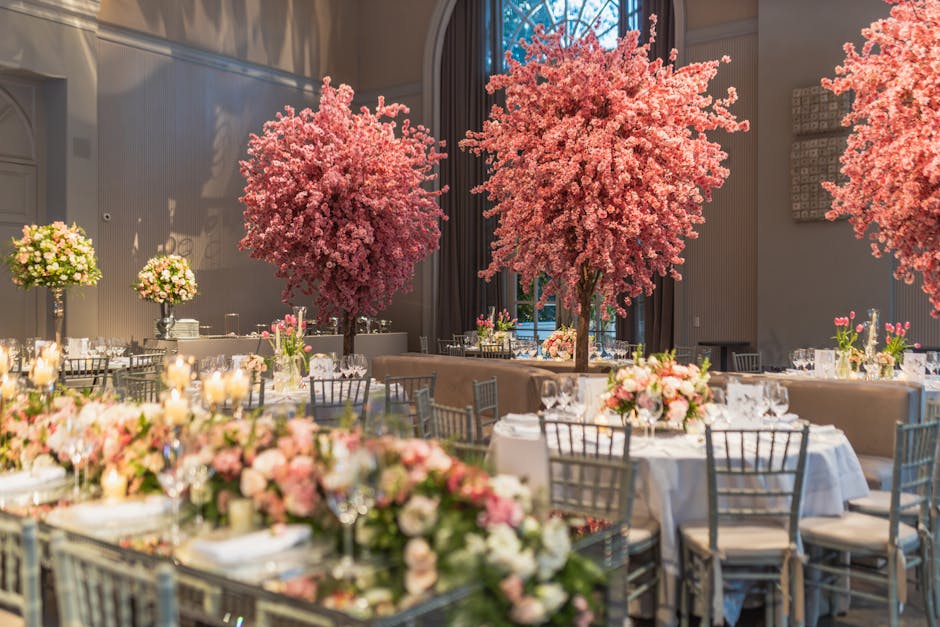
For example, a couple marrying at a central London townhouse may want narrow, candlelit tables with low arrangements that do not block conversation. A Manchester warehouse venue might suit larger meadow-style aisle arrangements or hanging foliage, with a warmer, less stiff feel. Both can be beautiful. The mood just lands differently.
3. Venue access and setup logistics
In London, traffic, loading restrictions, venue windows, and lift access can all influence labour. If a florist needs to set up early, park far away, or work within tight venue time slots, costs often rise. Some venues also have strict styling rules or preferred supplier lists, which can shape how a floral brief is executed.
Manchester venues can still have access limitations, especially in city-centre locations or heritage spaces, but many couples find the flow a little simpler. Fewer moving parts can mean less labour pressure. Not always, but often enough to matter.
4. Flower choice and seasonality
Seasonal flowers usually offer better value in both cities. But because London couples often ask for more premium, highly specific blooms, their quotes may include a bigger share of hard-to-source flowers. Manchester clients may lean a bit more into seasonal abundance, which can stretch budgets further.
For instance, if you want peonies out of season, you will feel that in any city. If you are happy to work with garden roses, ranunculus, tulips, chrysanthemums, and strong foliage when the season supports them, you usually get more texture for your spend. Seasonality is one of those practical decisions that quietly saves money without looking cheap. Good floristry should never look cheap anyway.
5. Labour intensity
Floristry is hands-on work. The more arrangements, installs, and ceremony changes you want, the more hours it takes. London weddings often involve more complex install briefs, while Manchester weddings may be slightly more likely to prioritise a few high-impact focal points rather than multiple layers across every part of the day.
That is a generalisation, yes, but a useful one. It can help couples decide whether they want broad coverage or a few statement moments. And that decision often matters more than the city name on the invoice.
| Factor | London | Manchester |
|---|---|---|
| Typical pricing pressure | Often higher due to labour, logistics, and premium venue expectations | Often more flexible, though premium designs can still be costly |
| Common style direction | Editorial, refined, architectural, luxe | Romantic, modern, seasonal, relaxed elegance |
| Venue access | Can be tightly managed, with loading and timing constraints | Often simpler, though city-centre venues can still be tricky |
| Flower sourcing | May include more bespoke or premium requests | Often more seasonal and value-led, depending on brief |
| Budget stretch | Can feel tighter for the same visual impact | Can sometimes stretch further for volume or coverage |
Key Benefits and Practical Advantages
Comparing cities is not just about saving money. It is also about matching your expectations to the environment you are actually planning in.
- Better budget control: When you know where London or Manchester pricing tends to shift, you can prioritise the things guests will actually notice.
- More realistic design planning: A venue in Mayfair and a venue in Didsbury do not ask for the same floral logic. Understanding that prevents awkward surprises.
- Sharper supplier conversations: You can brief florists more clearly, which usually leads to better quotes and fewer revisions later.
- Less waste: Choosing seasonal and venue-appropriate flowers helps reduce over-ordering and unnecessary spend.
- Stronger visual cohesion: If your flowers reflect the city and venue style, the whole wedding feels more intentional.
There is also a quieter benefit: confidence. Once you know why a quote is what it is, you stop second-guessing every line item. And honestly, that peace of mind is worth a lot in the run-up to a wedding.
If you are building a broader wedding supplier shortlist, it can help to look at related services too, such as finding a florist in London or exploring the florist's approach and values before you decide. Style matters, but so does how the team works with you.
Who This Is For and When It Makes Sense
This comparison is useful if any of these sound like you:
- You are choosing between a London venue and a Manchester venue.
- You are marrying in one city but want flowers sourced or designed from the other.
- You are trying to work out why one quote looks much higher than another.
- You want a luxury look without spending blindly.
- You care about seasonal flowers, design quality, and practical setup.
It also makes sense if you are helping a couple as a planner, family member, or venue coordinator. Flower budgets can become emotional fast, especially when Pinterest boards get involved. One minute it is "simple centrepieces," the next it is a full hanging meadow from the ceiling. Happens more often than people admit.
If you are the type who likes to compare a few approaches before committing, that is exactly the right instinct. Good floristry should be a conversation, not a guessing game.
Step-by-Step Guidance
Here is a practical way to compare wedding flower costs in London and Manchester without getting overwhelmed.
Step 1: Define your visual priority
Ask what matters most: ceremony impact, reception tables, bouquets, or a single hero installation. If everything is important, costs climb fast. If one or two focal points matter most, your florist can work smarter with the budget.
Step 2: Match the brief to the venue
Look at the room, ceiling height, aisle width, lighting, and table layout. A modern Manchester venue with exposed brick may need a different approach than a classic London ballroom. The flowers should complement the space, not fight it.
Step 3: Decide where to be seasonal and where to be flexible
You might want one or two premium flowers, but let the rest of the design follow what is available. That is often the best balance. Seasonal flowers are not the "budget" option in a bad way; they are simply the clever option.
Step 4: Separate must-haves from nice-to-haves
Write down what you truly need and what would be lovely if budget allows. This is where a lot of couples save money without losing the overall feel.
- Bouquets and buttonholes
- Ceremony flowers
- Reception table flowers
- Entrance or welcome arrangements
- Large-scale installations
Step 5: Ask how the quote is built
A good florist should explain the cost structure clearly: flowers, design time, prep, delivery, setup, and breakdown if relevant. If a quote is vague, ask for more detail. That is not rude. It is sensible.
Step 6: Review the impact-to-spend ratio
Sometimes a few large arrangements create more visual value than lots of tiny ones. In other cases, a fuller spread across the day feels more appropriate. There is no single right answer, but there is usually a more efficient one for your venue.
Step 7: Confirm timing and logistics early
Delivery windows, venue access, and room turnaround matter more than people think. Especially in London, where time slots can be tight and parking can be, well, character-building.
When you follow this process, you are less likely to get swept along by pretty pictures alone. And pretty pictures are useful, of course, but they are not a plan.
Expert Tips for Better Results
Here are the practical tips that tend to make the biggest difference, especially when comparing London and Manchester.
- Use one strong focal point: A good ceremony installation can define the whole room, then your table flowers can stay simpler.
- Choose flowers with structure: Blooms like roses, orchids, anthuriums, hydrangeas, and strong foliage can hold shape well in modern designs.
- Ask for scale examples: "Medium" means different things to different florists. Ask for visual references or previous proportions.
- Consider transport and setup time: If your venue is awkward to access, budget for the reality of it rather than hoping it disappears.
- Stay open on colour but firm on mood: Saying "soft, romantic, and airy" is often more helpful than naming ten exact flowers.
- Plan for the season you are in: Winter weddings in London and summer weddings in Manchester can look very different, and that is part of the charm.
One thing couples sometimes miss: the same flower can read very differently under different lighting. Candlelight, daylight through tall windows, and warm venue uplighting all change how a bouquet feels. Tiny detail? Yes. Important? Also yes.
And if you are working with a florist who asks detailed questions, that is a good sign. They are not being fussy. They are trying to avoid waste, mismatch, and last-minute stress.
Common Mistakes to Avoid
The most expensive mistake is usually not the flowers themselves. It is the mismatch between expectation and brief.
- Comparing quotes without comparing scope: One florist may include setup, mechanics, and breakdown while another does not.
- Ignoring venue restrictions: Some spaces limit hanging work, candles near florals, or late-night access.
- Chasing out-of-season flowers blindly: If you want a specific bloom, ask what it will cost and what the visual alternative is.
- Over-ordering small arrangements: Too many tiny pieces can add labour without adding much visual drama.
- Not asking about reuse: Ceremony flowers can often be repurposed for the reception if the setup allows it.
- Booking too late: By the time peak wedding dates arrive, the best designs may be harder to secure at the level of customisation you hoped for.
A very human one, this: couples sometimes fall in love with a flower name before they fall in love with the design. Peonies are gorgeous, absolutely. But if your budget only really works with a different mix, the better move is to protect the overall look, not just one bloom.
Tools, Resources and Recommendations
You do not need a complicated system, just a tidy one.
What to gather before requesting quotes
- Venue name and address
- Wedding date and timing
- Guest count
- Ceremony and reception layout
- Colour palette or mood board
- Must-have flowers, if any
- Images of floral styles you like and dislike
What to ask a florist
- What is included in the quote?
- How many stems or arrangements are planned?
- Which flowers are seasonal at my date?
- Can ceremony flowers be reused?
- Are delivery and setup costs separate?
- What happens if a flower is unavailable?
If you are searching locally, you may also want to explore wedding florist services in Manchester alongside area-specific wedding florist options in Hackney if your plans are east London-based. That can help you compare practical style direction as well as geography.
For couples who want a fuller sense of service scope, pages like corporate flowers can also be surprisingly useful because they reveal how a florist handles structure, installation, and consistency at scale. Different context, same discipline.
Law, Compliance, Standards, or Best Practice
Wedding floristry is not heavily regulated in the way some industries are, but there are still important best practices to keep in mind. Good florists should work safely, handle transport responsibly, and follow venue rules around access, fire safety, and installation methods.
In London especially, venues may have their own event policies about load-in times, protective coverings, open flame, and breakable structures. Manchester venues can have similar requirements, particularly in hotels, heritage buildings, and public event spaces. These are not just admin details. They affect what can actually be installed and when.
On the practical side, ask how arrangements will be secured, whether mechanics are reusable or single-use, and how waste will be handled after the event. If candles are used alongside florals, the venue's rules matter. If large suspended pieces are planned, structure and risk management matter even more.
Best practice also means clear written confirmation. A proper proposal should set out the designs, timings, inclusions, and any assumptions. That protects both you and the florist. No one enjoys a surprise on the morning of the wedding, least of all the person carrying 48 stems of hydrangea through a service lift.
Options, Methods, or Comparison Table
Here is a simple way to think about the main floral approaches couples usually compare.
| Approach | What it looks like | Best for | Budget feel |
|---|---|---|---|
| High-impact statement design | Large arch, hanging flowers, dramatic ceremony pieces | Couples who want a strong visual moment | Higher, especially in London |
| Seasonal romantic design | Full but relaxed arrangements with layered blooms and foliage | Garden-inspired weddings and softer palettes | Often better value |
| Minimal modern styling | Clean lines, fewer arrangements, strong shape | City venues, contemporary spaces, smaller weddings | Can be efficient if well planned |
| All-day repurposed florals | Ceremony flowers moved into the reception | Couples wanting more from the same spend | Usually sensible |
In London, couples often choose statement design because the venue and guest expectations support it. In Manchester, the same budget may stretch further into fuller table coverage or additional focal points. But here is the real point: the best option is the one that suits your venue and guest experience, not just the one that photographs well for five seconds on a screen.
There is also a hybrid method worth considering. Put most of the budget into the ceremony and entrance, then keep reception flowers simpler but well edited. It gives you the "wow" moment without draining the whole floral budget. A bit clever, really.
Case Study or Real-World Example
Imagine two couples with similar guest counts and similar taste: soft white, blush, and green florals with candles and a romantic feel.
Couple A marries in a central London townhouse. The venue has a tight delivery window, limited storage, and a small lift. They want a ceremony focal point, bridal bouquet, buttonholes, and 12 reception table arrangements. Because the setup is compact but labour-intensive, the florist builds time for transport and room turnaround. The couple gets a polished, refined result, but the quote reflects the logistics as much as the flowers.
Couple B marries in a Manchester venue with easier access and a larger room layout. They want similar flowers, but they choose one larger ceremony design, repurpose the blooms for the reception, and reduce the number of table pieces. The visual result feels generous and layered, and the budget goes further because the logistics are easier and the design is more efficiently structured.
The interesting part? Both couples end up with a beautiful wedding. The difference is not that one city "does flowers better." The difference is how the venue, access, and styling choices shape the outcome.
I remember hearing a planner describe this kind of decision as "paying for the room, not just the roses." That stuck, because it is true. Flowers live in context. They are not just objects. They are part of the space, the light, the movement, the photos, the whole day.
Practical Checklist
Use this checklist before you confirm your floral plan.
- Have I chosen the venue or at least narrowed it down?
- Do I know whether London or Manchester access rules may affect setup?
- Have I identified my top three floral priorities?
- Have I decided which flowers must be seasonal and which can be premium?
- Do I know whether ceremony flowers can be reused later in the day?
- Have I compared quotes on the same scope?
- Is the style brief clear enough to avoid guesswork?
- Have I asked about delivery, setup, and breakdown separately?
- Do I understand what happens if a flower is unavailable?
- Have I left enough time to finalise the design before peak season pressure kicks in?
If you can tick most of those off, you are in a strong position. Not perfect. Just strong. And that is usually enough to get a beautiful result without spiralling into decision fatigue.
Conclusion
When comparing London and Manchester wedding flowers, the real question is not simply which city is cheaper. It is which city gives you the best balance of style, logistics, and value for the kind of wedding you want. London often pushes toward more premium, highly bespoke floristry with tighter operational demands. Manchester often offers a little more room to stretch a budget into volume, seasonality, and relaxed elegance. But the right answer still depends on your venue, season, and priorities.
To get the best result, keep your brief focused, stay open to seasonal blooms, and compare like with like. That way you are not just buying flowers. You are building a look that feels right in the room, on the day, and in the photos you will keep for years.
And honestly, that is the lovely part. Once the music starts and the light catches the petals, the details stop being numbers and start becoming memory.
Get a free quote today and see how much you can save.
Frequently Asked Questions
Are wedding flowers more expensive in London than Manchester?
Often, yes, but not always. London can carry higher labour, logistics, and venue-access costs, which may push quotes up. Manchester can be more flexible, though premium designs in either city can still be expensive.
Why do wedding flower quotes vary so much between florists?
Quotes can vary because of design style, flower choice, labour, delivery, setup, and whether breakdown is included. Two florists may be proposing very different levels of service even if the headline price looks similar.
What style of wedding flowers is common in London?
London weddings often lean toward editorial, modern, sculptural, or luxury-inspired florals. That might mean refined colour palettes, statement installations, and a stronger emphasis on structure.
What style of wedding flowers is common in Manchester?
Manchester weddings often favour romantic, seasonal, and relaxed arrangements, although modern minimal looks are also popular. Many couples choose styles that feel fuller and value-led without losing polish.
How can I reduce wedding flower costs without making the decor look cheap?
Choose seasonal flowers, reuse ceremony arrangements at the reception, focus on one or two impact areas, and simplify the number of separate pieces. Good editing usually saves money while keeping the look strong.
Should I choose flowers based on city or venue first?
Venue first, usually. The venue tells you about scale, access, and mood. The city matters too, but the room itself should guide most of the floral plan.
Can I use the same floral brief for London and Manchester suppliers?
You can, but it is better to adapt it slightly. A London venue may require more logistics detail, while a Manchester venue may give you different opportunities for volume or layout. The brief should fit the setting.
Do seasonal flowers really make a big difference to cost?
Usually, yes. Seasonal flowers are often easier to source and may give you better value, while out-of-season blooms can add cost and uncertainty. They also tend to look more natural for the time of year.
What should I ask before accepting a wedding flower quote?
Ask what is included, how the flowers will be delivered and installed, whether setup and breakdown are separate, and what happens if certain blooms are unavailable. Clear answers are a good sign.
Is it worth paying for a big ceremony installation?
If the ceremony space is the focal point of your day, often yes. A strong ceremony design can define the whole event and sometimes be repurposed later. If the reception is the bigger visual moment, you may want to spread the budget differently.
How far in advance should I book a wedding florist?
The sooner the better, especially for peak wedding dates and more bespoke designs. Once your venue and date are secure, it is sensible to start conversations early so you have more choice and less pressure.
What if my favourite flowers are out of season?
A good florist should offer realistic alternatives that keep the style intact. You may still be able to include the favourite bloom in a small way, but the full design should work even if one flower changes.
Do I need different floral plans for a city wedding and a countryside wedding?
Usually, yes. City venues often suit sharper logistics and more structured styling, while countryside settings may lend themselves to softer, more expansive arrangements. The same flowers can work in both, but the scale and flow often change.
If you are still weighing up options, keep the focus on what will look and feel right in your actual venue. That is where the best decisions tend to happen, quietly, one honest choice at a time.