Spring table centrepiece ideas for easy seasonal styling
Spring has a way of making even the most ordinary table feel hopeful again. A simple jug of tulips, a few bud vases, a bowl of lemons, or a line of soft candles can change the whole mood of a room without much effort at all. That is really the appeal of spring table centrepiece ideas for easy seasonal styling: they help you refresh your dining table, kitchen island, console, or event table quickly, neatly, and without overthinking it.
If you want your table to feel lighter, brighter, and more welcoming for everyday meals or Easter gatherings, you do not need a giant floral arrangement or a designer budget. You just need the right mix of shape, colour, scale, and texture. In this guide, we will walk through simple centrepiece ideas, how to style them well, common mistakes to avoid, and practical ways to make the look feel polished rather than plonked down at the last minute. Lets face it, that last part matters.
For more seasonal home inspiration, you may also like spring home decor ideas, Easter table decor tips, and our seasonal flower guide.
Table of Contents
- Why spring table centrepiece styling matters
- How easy seasonal centrepieces work
- Key benefits and practical advantages
- Who this is for and when it makes sense
- Step-by-step guidance
- Expert tips for better results
- Common mistakes to avoid
- Tools, resources and recommendations
- Law, compliance, standards, or best practice
- Options, methods, and comparison table
- Case study or real-world example
- Practical checklist
- Conclusion
- Frequently asked questions
Why spring table centrepiece ideas for easy seasonal styling Matters
A table centrepiece does more than fill the middle of a surface. It sets the tone for the whole room. In spring, people usually want something that feels fresh, open, and a bit less heavy than winter styling. Think soft greens, pale blooms, natural textures, and arrangements that let the light move around the table rather than block it.
This matters for a few simple reasons. First, spring styling is often about transition. You are moving away from the cosy, layered look of winter, but you may not want anything too bold or overly formal. Second, the table is usually one of the easiest places to make a visible change. A well-chosen centrepiece can make breakfast feel nicer on a Tuesday, and it can also pull together a lunch with friends on a Sunday. Small thing, big effect.
There is also a practical side. Easy seasonal styling should be quick to refresh, easy to clean around, and flexible enough to suit different occasions. A beautiful table that has to be rebuilt every morning is not especially useful. The best spring table centrepiece ideas look good, hold up well, and do not make you feel like you are running a full-time florist's workstation in the middle of your kitchen.
For homes and venues alike, the value is really in confidence. You know the table looks considered, even if it only took fifteen minutes to put together. And that is the sweet spot most people are after.
How Spring table centrepiece ideas for easy seasonal styling Works
The basic idea is straightforward: choose one focal arrangement, then support it with a few low-key elements that echo spring without crowding the table. Good centrepieces usually work because they balance three things: height, colour, and space.
Height matters because a centrepiece that is too tall can block conversation. Colour matters because spring styling tends to look best when it feels airy and fresh rather than dense and heavy. Space matters because the table still has to function. You need room for plates, glasses, serving dishes, tea mugs, and the inevitable pile of birthday cards or snack bowls that appears out of nowhere.
In practice, easy seasonal styling often uses one of these formats:
- A single statement vessel such as a ceramic bowl, a glass vase, or a stoneware jug.
- A cluster arrangement of bud vases, candles, and small floral pieces.
- A low runner-style display made from greenery, fruit, moss, or short-stem flowers.
- A functional centrepiece that doubles as a serving piece, such as a tiered tray or fruit bowl.
The styling process is usually less about matching everything and more about creating a visual rhythm. You want one item to lead, others to support, and enough open space to keep it all feeling relaxed. If you've ever seen a table that looked lovely in the photo but impossible to actually use, you'll know exactly why this balance matters.
Spring centrepieces also work best when they echo the rest of the room. A rustic kitchen may suit woven textures and ceramic pots. A more modern dining room may look better with clear glass, simple lines, and restrained colour. Matching the feel of the room is often more important than following a trend. Truth be told, that is usually what makes the styling feel natural.
Key Benefits and Practical Advantages
Easy spring table styling offers more than a pretty finish. It can improve how a space feels and how people use it. Here are the main benefits, in plain terms.
1. It refreshes a room quickly
You do not need to repaint walls or replace furniture to make a space feel new. A spring centrepiece can soften winter heaviness and bring in a lighter mood with very little effort. That is especially useful if you rent, host often, or simply want seasonal change without a full makeover.
2. It keeps the table usable
One of the biggest advantages of easy seasonal styling is practicality. A good centrepiece leaves space for daily life. You can still set down breakfast, serve lunch, or move plates around without nudging a huge arrangement out of the way. Not glamorous, maybe, but very important.
3. It works for both everyday and entertaining
A simple table arrangement can be dressed up or down. Add candles and napkins for guests. Remove a few items for a weekday meal. This flexibility makes it a smart approach for busy households and smaller spaces.
4. It supports a consistent seasonal theme
Spring styling often works best when the table is part of a broader seasonal story. A vase of tulips can echo cushions, artwork, or a wreath on the door. If you want ideas that connect across the home, have a look at seasonal table setting ideas and spring flower arrangements for the home.
5. It can be budget-friendly
You do not need to buy a completely new set of decor. A few stems from the market, a jar from the cupboard, and some greenery from the garden can go a long way. In our experience, the simplest arrangements often look the most elegant because they are not trying too hard. That sounds obvious, but it is easy to forget.
Expert summary: The best spring centrepiece is usually the one that feels easy to live with. If it looks lovely but gets in the way, it has missed the point. Keep it low, keep it light, and let the table breathe.
Who This Is For and When It Makes Sense
This approach suits a lot of people, which is part of why it works so well. You might be planning a family brunch, refreshing a kitchen table, styling a rental property, or preparing a venue for a seasonal event. The principles are the same, even if the scale changes.
It makes sense if you are:
- Looking for a fast seasonal update without a full room redesign.
- Hosting Easter lunch, a spring birthday, or a casual garden gathering.
- Trying to make a small room feel brighter and less cluttered.
- Wanting a centrepiece that is elegant but not overly formal.
- Working with a modest budget and a limited amount of time.
It also makes sense if you are styling a home for guests or creating a welcoming first impression. In a London terrace, a suburban dining room, or a compact flat with one main table, the right centrepiece can do a lot of heavy lifting. It quietly says: this space is cared for.
If you need broader event support, you may also find event floristry services and home styling support useful as next steps.
Step-by-Step Guidance
If you want the look to feel effortless, it helps to think in steps rather than jumping straight to buying flowers. A calm, simple process usually gives a much better result.
Step 1: Decide how the table is used
Start with function. Is this a daily dining table, an occasional display table, or a centrepiece for an event? A family breakfast table needs something lower and sturdier than a sideboard display. A formal dinner table may allow for a little more drama, though not too much if people still need to see each other.
Step 2: Choose a clear style direction
Pick one mood and stick to it. A few useful directions are:
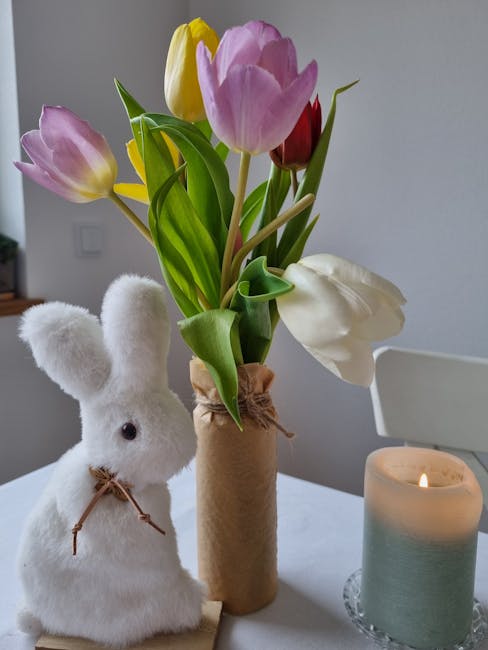
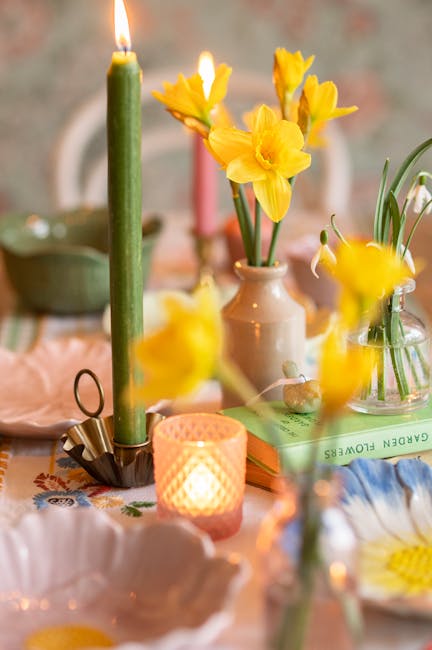
- Fresh and floral with tulips, daffodils, hyacinths, and pale greenery.
- Natural and relaxed with branches, moss, wood, and neutral ceramics.
- Bright and joyful with lemons, patterned napkins, and mixed spring blooms.
- Soft and elegant with cream flowers, glassware, and candlelight.
Do not try to use all of them at once. That is how things get fussy very quickly.
Step 3: Pick the main vessel or base
This is the anchor of the arrangement. A tall vase works for a narrow sideboard; a low bowl works better for a dining table. Baskets, trays, ceramic jugs, and footed bowls can all work, depending on the feel you want.
Step 4: Build around one focal point
Choose one dominant feature first. That might be a bouquet, a bowl of fruit, a lantern, or a cluster of candles. Then add supporting pieces in smaller amounts. This is where many people overdo it. Resist the urge to keep adding "just one more thing."
Step 5: Check height and visibility
Sit down at the table and look across it. Can you see the person opposite you without peering round a vase? Can you reach serving dishes easily? If not, adjust the height or reduce the number of pieces. This one test solves a lot of problems.
Step 6: Add texture, not clutter
Texture is what keeps a spring arrangement from looking flat. Try mixing glass with ceramic, soft petals with woody stems, or smooth fruit with rough linen. Even a single linen runner under a small display can change the whole mood.
Step 7: Finish with something alive
Fresh flowers are the obvious choice, but they are not the only one. A sprig of rosemary, a few branches from the garden, or a bowl of seasonal fruit can bring life to the table too. This is often the bit that makes the styling feel real rather than staged.
Expert Tips for Better Results
Here is where the little details start to matter. The difference between "nice" and "really lovely" is often quite small.
Keep the palette narrow
Two or three main colours are usually enough. Soft pink, white, and green is a classic spring combination. Yellow and cream can feel cheerful without becoming noisy. If you introduce too many shades, the table can lose its calmness.
Use odd numbers where possible
Three bud vases, five candles, or seven stems often looks more natural than even groupings. That said, there is no rigid rule. If an even number works better for the space, use it. Design should support the room, not boss it about.
Mix formal and informal pieces
A polished centrepiece often feels better when one or two parts are a bit relaxed. For example, a crisp white tablecloth can be softened with handpicked tulips, or a very neat vase arrangement can be balanced by a loose linen napkin. A tiny bit of contrast goes a long way.
Think in layers, not matching sets
Layering means combining different heights and textures without making the table look busy. A low bowl, a small candle, and a single stem in a glass bottle can be enough. You do not need a full matching set unless that is your style.
Choose flowers that are forgiving
If you want low-maintenance spring styling, go for blooms that do not droop instantly in a warm room. Tulips, carnations, daffodils, ranunculus, eucalyptus, and blossom branches can all work well, depending on the temperature and the setting. Flower choice really does affect how long the arrangement stays looking tidy.
Work with the room light
Morning light, afternoon sun, and evening lamp light all change how a centrepiece reads. A glass vase can sparkle beautifully in daylight but look invisible at night unless you add candlelight. A matte ceramic bowl, on the other hand, often looks good at any time of day. A small thing, but worth noticing.
If you want additional inspiration for balancing flowers and tableware, see table centrepiece flower ideas and our seasonal table decor guide.
Common Mistakes to Avoid
Most spring table centrepieces go wrong for the same few reasons. The good news is that they are easy to fix once you know what to look for.
Making the arrangement too tall
This is the classic mistake. It looks impressive for about five minutes, then everyone starts leaning sideways at dinner. Keep tall stems for sideboards or corners, and use lower pieces for eating tables.
Using too many competing colours
Spring invites colour, but too much colour can tip into confusion. If you already have patterned plates or a bright tablecloth, keep the centrepiece simpler. Let one element lead and the rest support it.
Ignoring the practical use of the table
A centrepiece should not make serving awkward. If it has to be moved every time you set down a dish, it is probably too large or too heavy. Easy seasonal styling should feel helpful, not demanding.
Choosing pieces that feel out of season
Heavy velvet, dark branches, or overly dramatic faux arrangements can feel a bit out of step in spring unless they are very carefully handled. You can mix styles, of course, but keep the overall mood light.
Leaving no breathing space
Empty space is part of the design. If every inch of the table is filled, the eye has nowhere to rest. This is one of the biggest differences between elegant styling and clutter.
Forgetting maintenance
Fresh flowers need water. Citrus needs replacing once it starts looking tired. Candles need safe placement. It sounds obvious, but it is easy to forget when you are in the middle of setting everything up. A centrepiece should fit your routine, not the other way around.
Tools, Resources and Recommendations
You do not need a huge kit to style a spring centrepiece well. A few sensible basics will cover most situations.
| Item | Why it helps | Best use |
|---|---|---|
| Low vase or bowl | Keeps the arrangement practical and visually calm | Dining tables and everyday styling |
| Bud vases | Easy to move, simple to style, and good for small blooms | Clusters, shelves, and longer tables |
| Floral scissors or shears | Helps stems sit properly and last longer | Fresh flowers and greenery |
| Linen runner | Adds softness and separates the centrepiece from the surface | Rustic, relaxed, or layered looks |
| Candles or tealights | Brings warmth once the light fades | Evening meals and entertaining |
| Seasonal fruit | Adds colour and can double as a useful kitchen item | Kitchen islands and casual tables |
If you are building a small seasonal setup from scratch, try starting with one vessel, one candle style, and one natural element. That alone can be enough. Seriously. A bowl, a branch, and a candle can look better than a table full of unrelated bits.
You may also want to browse interior styling advice, floral arrangement tips, and seasonal decor inspiration for more ideas that work across the home.
Law, Compliance, Standards, or Best Practice
For home table styling, there usually are not formal legal requirements. Still, there are a few sensible best practices, especially if you are using candles, fresh flowers, or styling a venue for public use.
Fire safety: If candles are part of the centrepiece, keep them away from dry flowers, paper decorations, and anything that could easily catch. Never leave lit candles unattended. In a busy home or hospitality setting, battery candles may be a safer choice for some situations.
Food hygiene and practicality: If the table is being used for meals, avoid placing decorations so close to food that petals, dust, or decorative filler can fall into dishes. That is particularly relevant in shared homes, cafes, and event spaces.
Accessibility and usability: A good arrangement should not block sightlines or create trip hazards. For venues, this is not just about appearance; it affects how comfortably people can use the space.
Venue and event expectations: If you are styling for a hotel, restaurant, or hire space, check the property's rules on open flames, breakables, and table coverings. Most venues have their own practical guidance, and it is better to ask than assume. A quick check saves hassle later.
For wider venue support, you may find venue styling guidelines and event safety advice helpful. Best practice is usually simple: keep it safe, keep it stable, and keep it easy to manage.
Options, Methods, or Comparison Table
Choosing the right type of centrepiece depends on the room, the occasion, and how much upkeep you want. Here is a practical comparison to help you decide.
| Method | Look and feel | Pros | Watch out for |
|---|---|---|---|
| Single vase of blooms | Clean, classic, easy | Quick to style, minimal clutter, suits most tables | Can feel too plain if the vessel is too small or the flowers are sparse |
| Bud vase cluster | Light, playful, flexible | Easy to move, good for long tables, nice with mixed stems | Needs a little more arranging so it does not look scattered |
| Low floral runner | Soft, abundant, event-friendly | Great for dining, keeps sightlines open, feels seasonal | Can take longer to prepare and maintain |
| Fruit and foliage bowl | Fresh, natural, kitchen-friendly | Doubles as decoration and practical storage | Fruit may need replacing more often |
| Candle-led display | Warm, atmospheric, evening-focused | Nice for dinners and quieter settings | Needs careful placement and safety awareness |
For most households, a single vase or bud vase cluster is the easiest starting point. For a larger table or a special meal, a low runner often gives the most refined finish. There is no perfect answer, just the right one for your table on that day.
Case Study or Real-World Example
Here is a simple real-world style example. A homeowner with a small dining table wanted something spring-like for a Sunday lunch, but the table also had to work for weekday meals and homework. The first instinct was to use a tall bouquet, because it looked lovely in the shop. On the table, though, it blocked sightlines and felt a bit too showy.
The better solution was a low ceramic bowl filled with short-stemmed tulips, a few sprigs of eucalyptus, and two small candles placed slightly off-centre. A linen runner softened the surface, and a shallow fruit bowl sat nearby on the sideboard rather than in the middle of the table. The whole room felt calmer straight away.
What made this work was not abundance. It was restraint. The centrepiece suited the size of the room, left space for plates, and could be adjusted in minutes. By the following week, the flowers had changed, but the same bowl and candles were still being used. That kind of flexibility is exactly what easy seasonal styling should give you.
If you are planning something similar in a flat, terrace, or compact family dining room, the trick is to think about how the table behaves at different times of day. A beautiful table at 7pm still needs to be a useful table at 7am. That is the reality, really.
Practical Checklist
Use this quick checklist before you set the table or finalise your centrepiece:
- Have you chosen one clear style direction?
- Does the centrepiece suit the size of the table?
- Can people see and speak across the table easily?
- Have you kept the colour palette simple?
- Is the arrangement stable and easy to clean around?
- Are candles placed safely and away from dry materials?
- Does the display still leave room for food and drinks?
- Have you mixed at least one natural element with your main vessel?
- Will the centrepiece still look good tomorrow morning?
- Have you removed anything that feels extra just for the sake of it?
Quick takeaway: If the table still feels comfortable to use, you are probably on the right track. That is the real test.
Conclusion
Spring table styling does not need to be complicated to look thoughtful. In fact, the most successful centrepieces are usually the ones that feel light, natural, and easy to live with. A well-placed vase, a few seasonal blooms, a soft runner, or a bowl of fresh fruit can shift the whole atmosphere of a room without taking over the space.
The real goal is not perfection. It is creating a table that feels ready for the season, easy to enjoy, and simple to maintain. Once you start thinking in terms of shape, height, texture, and function, the choices become much clearer.
If you are planning a seasonal refresh, start small, edit generously, and let the table breathe a bit. That gentle, unfussy approach is often the one people remember most.
Get a free quote today and see how much you can save.
And if all you do this week is swap in a few fresh stems and let the daylight do the rest, that is still a lovely start. Sometimes spring just needs a quiet hand.
Frequently Asked Questions
What is the easiest spring table centrepiece to make?
A single vase of seasonal flowers is usually the easiest option. Tulips, daffodils, or mixed greenery in a simple jug can look fresh with very little arranging. If you want even less fuss, a bowl of lemons or a small candle cluster works well too.
How do I make a spring centrepiece look expensive on a small budget?
Keep the palette limited, use one strong vessel, and avoid overcrowding the table. A few good stems in a beautiful jar often look better than lots of cheaper items. One neat arrangement can be enough.
What flowers are best for spring table styling?
Tulips, daffodils, hyacinths, ranunculus, blossom branches, and eucalyptus are all common spring choices. The best option depends on the room temperature, how long you need them to last, and whether you want a neat or a looser look.
How tall should a table centrepiece be?
For dining tables, lower is usually better. The arrangement should let people see each other and talk without leaning round it. A low vase or bowl is often more practical than a tall display.
Can I use candles in a spring centrepiece?
Yes, candles can add warmth and softness, especially in the evening. Just keep them away from dry materials and always place them safely. In some homes and venues, battery candles may be the more practical choice.
What colours work best for easy seasonal styling in spring?
Soft pink, white, cream, pale yellow, and fresh green are reliable choices. If you want a bolder look, use one brighter colour as an accent rather than mixing many strong shades together.
How do I keep a spring table centrepiece from looking cluttered?
Use fewer pieces, choose one focal point, and leave open space around the arrangement. It also helps to stick to one style direction, such as natural, floral, or candle-led, rather than blending everything at once.
What can I use instead of flowers?
Fruit, branches, herbs, candles, ceramics, and greenery can all work beautifully. A bowl of lemons or a tray with rosemary and a candle can feel seasonal without using flowers at all.
How often should I change a fresh spring centrepiece?
That depends on the materials. Fresh flowers may need refreshing every few days, while candles, ceramic pieces, or fruit displays can last much longer. A quick tidy and stem trim often keeps things looking good.
Is it okay to mix artificial and fresh elements?
Yes, if it is done carefully. A few high-quality faux stems can support a fresh arrangement and make it last longer. The key is to keep the overall look natural so the mix is not obvious in a bad way.
What is the best centrepiece for a long table?
A low runner-style arrangement or a cluster of small vases usually works well on a long table. These options spread visually along the surface without creating one bulky object in the middle.
Are there any safety rules I should think about?
Yes. If you are using candles, keep them stable and away from flammable decorations. If the table is for food, make sure petals, wax, or decorative filler cannot fall into dishes. For venues, check house rules and any relevant fire safety guidance.